Websites for therapists
Creating websites for therapists that convey trust and clarity
A website can help people understand who you are and how you work, so they can tell whether your approach makes sense for what they are looking for. The information should be clear and professional, without turning a supportive relationship into a commercial promise.
The introductory call comes with no obligation.

Starting point
A space worthy of the relationship you offer
Before booking a session, people naturally want to understand the approach, the experience, the themes you work with and how the support works. The website should answer these questions calmly and let people move forward without pressure.
Many therapists already have well-established work, but present it only through social media. The essential information ends up scattered across old posts, and newcomers cannot find what they need.
Structure
What the website can bring together
- professional introduction
- approach and framework
- types of sessions or support
- in-person and online sessions
- areas or themes you work with
- training and credentials
- frequently asked questions
- content and resources
- booking through an external calendar
- contact form
- privacy information
- courses, groups or workshops, where they exist
You don't need to include all of these areas. The structure is defined around your actual work.
Identity
No one-size-fits-all templates
Not all therapists use the same language, offer the same services or build the same relationship with their audience. The structure, like the copy and images that go with it, should respect each professional's identity and boundaries.
The tone is discreet and considered. There are no promises of results or insistent sales pitches, and clinical language appears only when it is genuinely needed.
Journey
From first contact to booking
The journey should be simple: getting to know the professional, understanding the approach, clearing up any questions and finding a clear way to get in touch or book. There is no need for insistent calls to action or dozens of repeated buttons.
When there is an online calendar, the website can send people straight to it to book. When the first contact happens by message, the form gathers only the information that is needed.
Demonstration project
Essência Terapêutica
Therapies and wellbeing
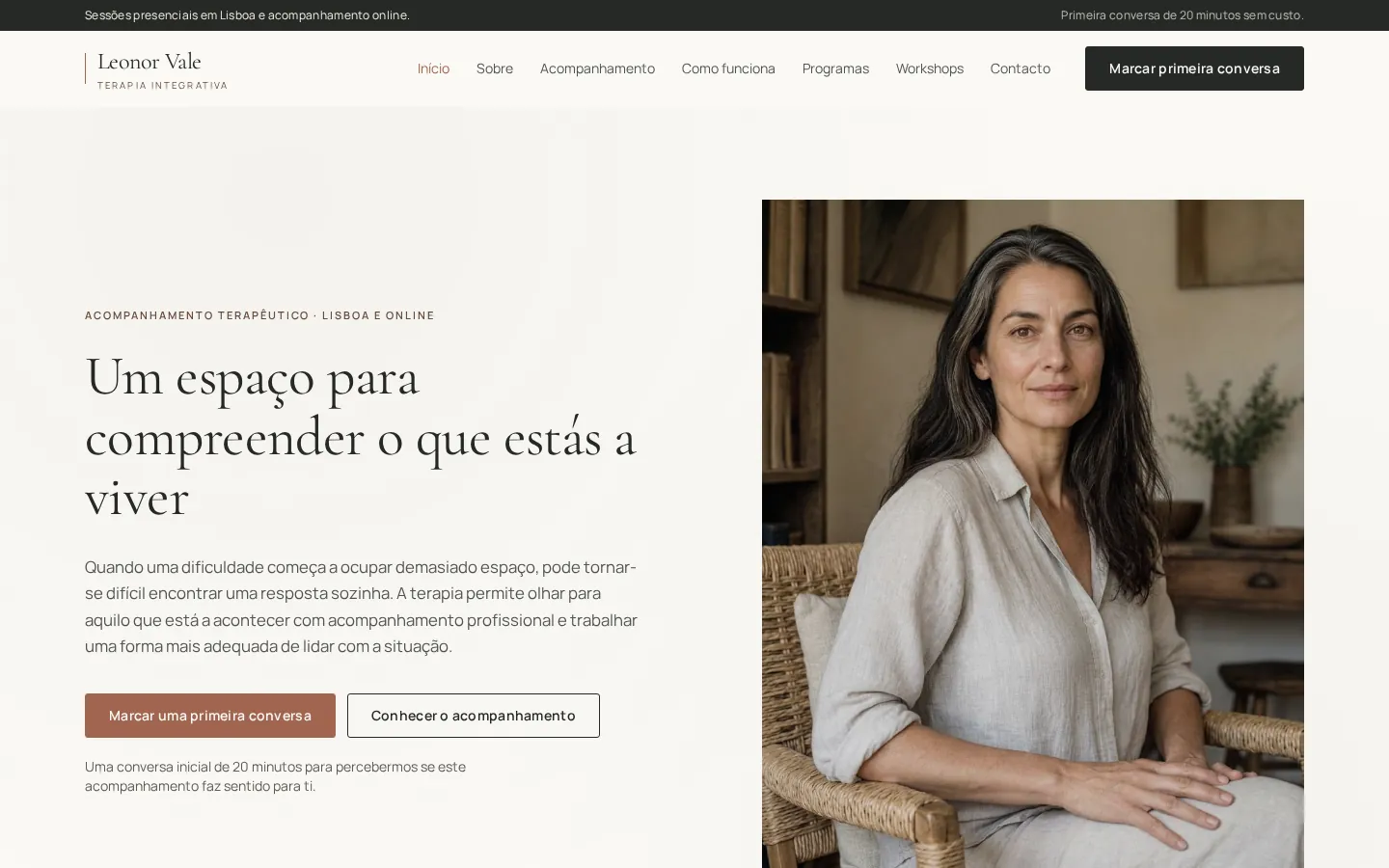
A demonstration project presenting the approach, areas of support, one-to-one sessions, group programmes, workshops and resources.
Frequently asked questions
Common questions about this kind of website
Do I need a website if I already have social media?
Social media helps you stay visible, but it does not keep the essential information organised. A website brings your approach, services, terms and contact details together in one place, and it remains accessible at any time.
Can I present in-person and online sessions on the same website?
Yes. The two formats can be presented separately, with the practical information for each one, including location, length and how to book.
Do I need to show prices?
It isn't compulsory. You can show fees, price ranges or simply invite people to get in touch. The decision is yours and can be changed later.
Can a booking calendar be integrated?
Yes. The website can link to a booking service agreed in advance, so you keep managing your calendar where you already work.
Do I need to have the copy written?
Before the build, we identify the content needed. The final copy and images are usually provided by you, with guidance from me on the structure and length of each section.
Next step
Talk about a website for my work
Tell me what you already have, what you would like to create and where you are finding things most difficult. From there, we can work out what the best next step might be.